Our Work
Sand and Stained Leather: Honda Sedan Interior Detail in Miami
A red-and-black leather interior in Miami came in with sand packed into the carpet and grime worked into the seat panels. Here's what it took and how to keep it that way.
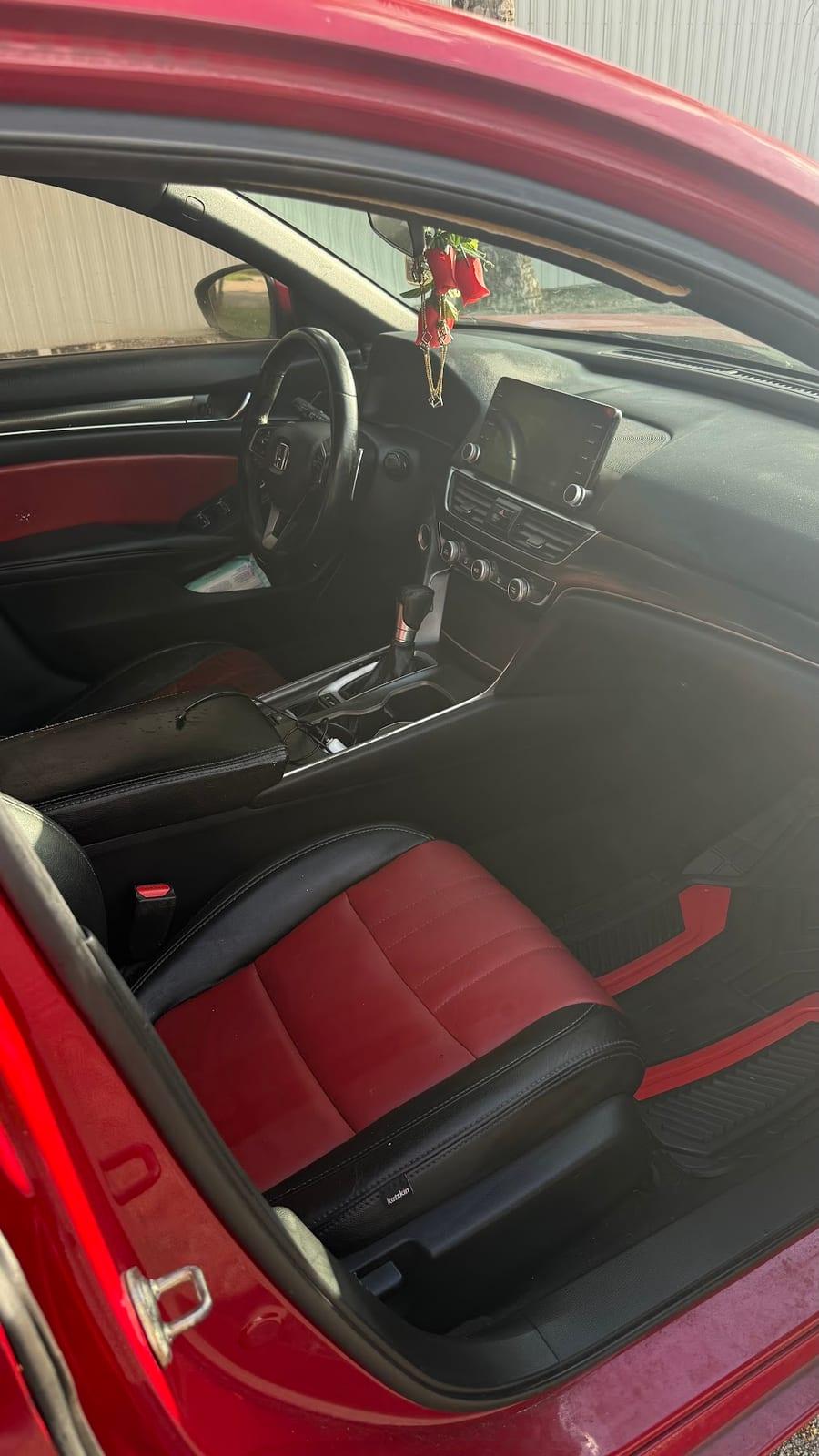
A red Honda sedan came to us in Miami with a custom interior job. The seats are the red-and-black leather combination, which looks sharp when it's clean and shows every bit of soil when it isn't. This one wasn't clean.
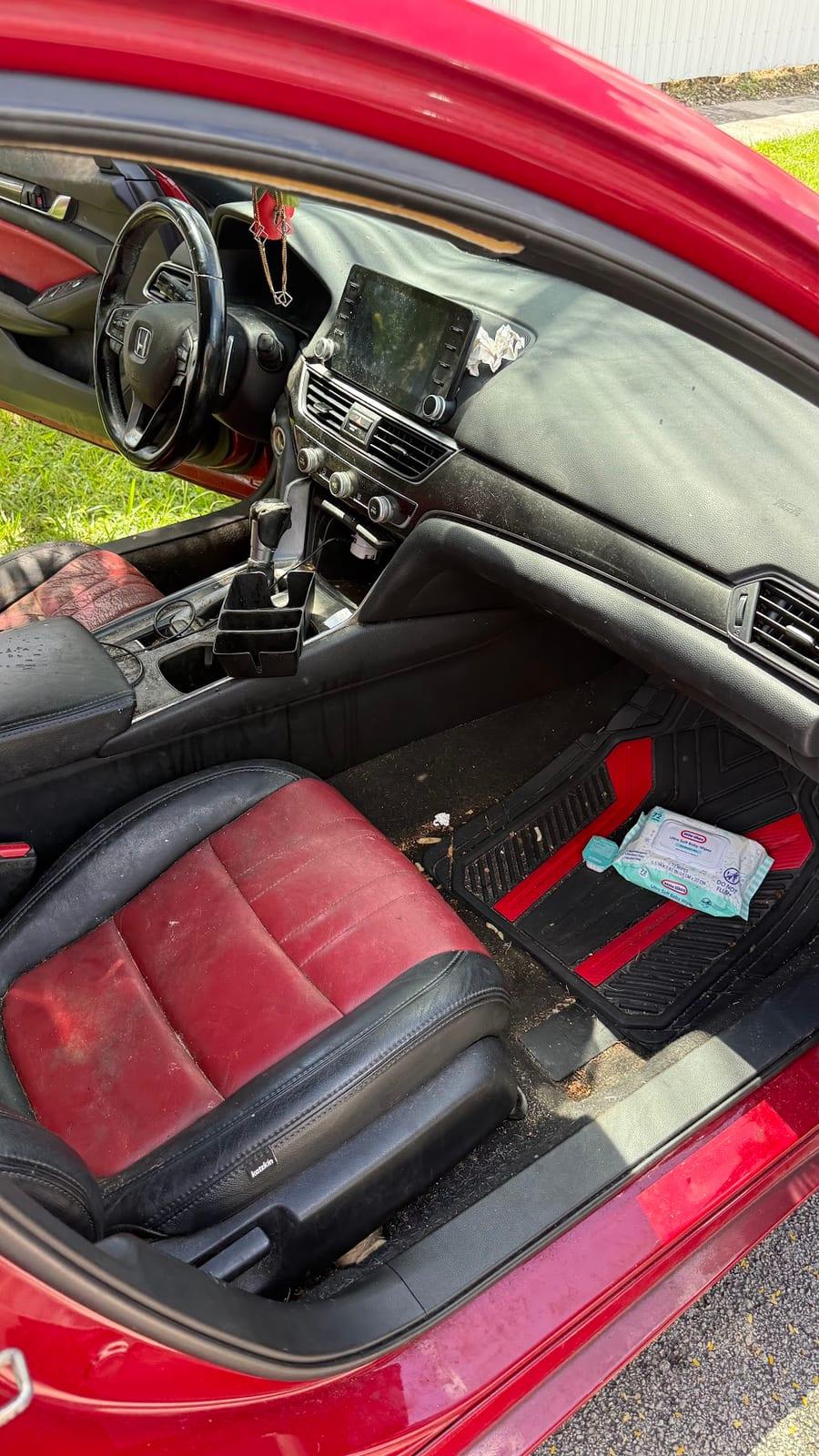 Front passenger area of a red Honda sedan before detailing, with sand and debris across the floor mat and carpet, a discarded wipes packet on the mat, dusty dash and screen, and soiled red-and-black leather seats.
What the car came in with
The floor tells the story. There's a layer of sand and loose debris spread across the driver's floor mat and out onto the carpet at the door sill, with more of it collected in the channels of the rubber mat. A used wipes packet is sitting on the mat. The dash has a visible film of dust, dull enough that it flattens the screen and the vent trim. The seat itself shows the worst of it: the red leather bolsters and cushion have grime worked into the grain and along the seams, and the black sections have that shiny, handled look that comes from body oils sitting on a surface for a long time.
None of this is unusual for a car that gets used. It's just what happens when a daily driver in South Florida goes a while between real cleanings.
Why interiors go downhill fast here
Sand is the obvious one. Beach trips, construction dust, and the general grit on Miami roads all get tracked in on shoes, and sand doesn't stay on top of the carpet. It migrates down to the base of the fibers and sits there. Every time someone steps in, that grit gets pressed deeper and acts like a mild abrasive against the carpet backing. Vacuuming the surface picks up what you can see and leaves most of what matters.
Heat and humidity do the rest. A car parked outside in Miami can hit cabin temperatures well above the outside air, and heat accelerates the way skin oils, sunscreen, and spilled drinks bond to leather and plastic. Humidity keeps everything slightly damp, which helps fine dust stick to the dash instead of blowing off. On light-colored leather like these red panels, the result is soil that stops being a surface layer and starts being part of the look of the seat.
UV is the slow one. Direct sun through the windshield hits the top of the dash hardest, and dust sitting on a hot dash traps that heat against the vinyl. Over years, that's how dashboards fade and crack.
What the crew did
This was a custom job built around interior detailing, so the work stayed inside the cabin.
The floor came first. Loose trash and the mats came out, and the carpet got worked to bring the sand up out of the fiber base before it was vacuumed — agitation first, then extraction, because the reverse order just moves grit around. Door sills and the channel where the carpet meets the sill plate get the same treatment; that's where sand collects and where it gets reintroduced every time you open the door.
The leather was cleaned with a pH-appropriate product and light mechanical agitation, then wiped down rather than saturated. Coated automotive leather responds well to that approach: the soil sits on the topcoat, and lifting it off without soaking the panel or attacking the finish is the whole game. Aggressive cleaners and stiff pads are what turn a dirty seat into a faded, cracked seat a year later.
Hard surfaces — dash, console, vents, screen bezel, door panels — were cleaned of the dust film. Screens and gloss trim get handled separately from the rest of the dash because they scratch more easily than textured plastic.
The same Honda sedan front interior after detailing, with clean carpet and floor area, a dust-free dash and center console, and red-and-black leather seats wiped down to an even matte finish.
The result
The after photo is a different-looking cabin. The carpet and floor area read as clean and even, with no sand visible at the sill or across the mat area. The dash and console have lost the dust haze, so the trim and screen have their own definition back instead of a uniform gray film. The leather is the biggest change: the red panels are an even color again, the black sections have a consistent matte look rather than that oily shine, and the seams and stitching are defined instead of packed with soil.
Worth being clear about what an interior clean does and doesn't do. It removes soil. Wear that's already in the leather — creasing on a driver's bolster, for instance — stays wear. What cleaning buys you is that the surface stops degrading from the soil sitting on it.
Keeping it there
Three habits do most of the work:
Shake the mats out weekly. Sand that stays on the rubber mat never makes it into the carpet. This is the single highest-return thing you can do in a beach city.
Wipe the seats when you notice, not when it's obvious. A damp microfiber pass on high-contact leather every couple of weeks keeps body oils from setting. Once soil has been baking into the grain for months, it takes real chemistry to get out.
Park in shade where you can, and keep the dash dust-free. Clean vinyl under a windshield handles UV better than dusty vinyl. A protectant on the dash and door tops is worth it; elsewhere it's mostly cosmetic.
If something has already set — a drink spill on carpet or a mark in a seat panel — that's a stain removal job rather than a wipe-down, and it's easier the sooner it's addressed.
We work out of the customer's driveway, lot, or garage, so mobile detailing in Miami doesn't require leaving the car anywhere. We bring water and power with us.
Frequently asked questions
- How do you get sand out of car carpet?
- Sand works its way down to the base of the carpet fibers, so surface vacuuming rarely gets it all. Agitating the carpet with a brush to lift the grit up before extracting it is what actually removes it, and it usually takes more than one pass.
- Will cleaning damage light-colored leather seats?
- Not if the product matches the surface. Most factory leather is coated, so a pH-balanced cleaner worked with a soft brush and wiped off lifts soil without stripping the finish. Harsh all-purpose cleaners and scrubbing pads are what cause discoloration and cracking.
- How often should a daily-driven car in Miami get its interior cleaned?
- For a car that carries sand, kids, or food, every four to eight weeks keeps grit from grinding into the carpet and body oils from setting into the seats. Cars that stay clean day to day can stretch further between services.
Related from Teal Detailing
Want this done for you?
We bring everything to your home or office across Miami-Dade, Broward, and Palm Beach — water and power included.